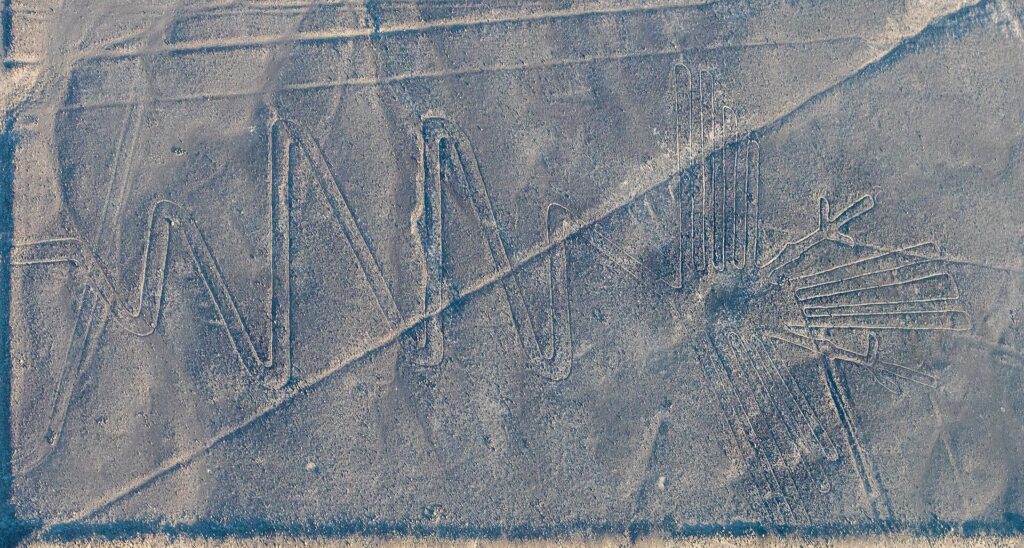
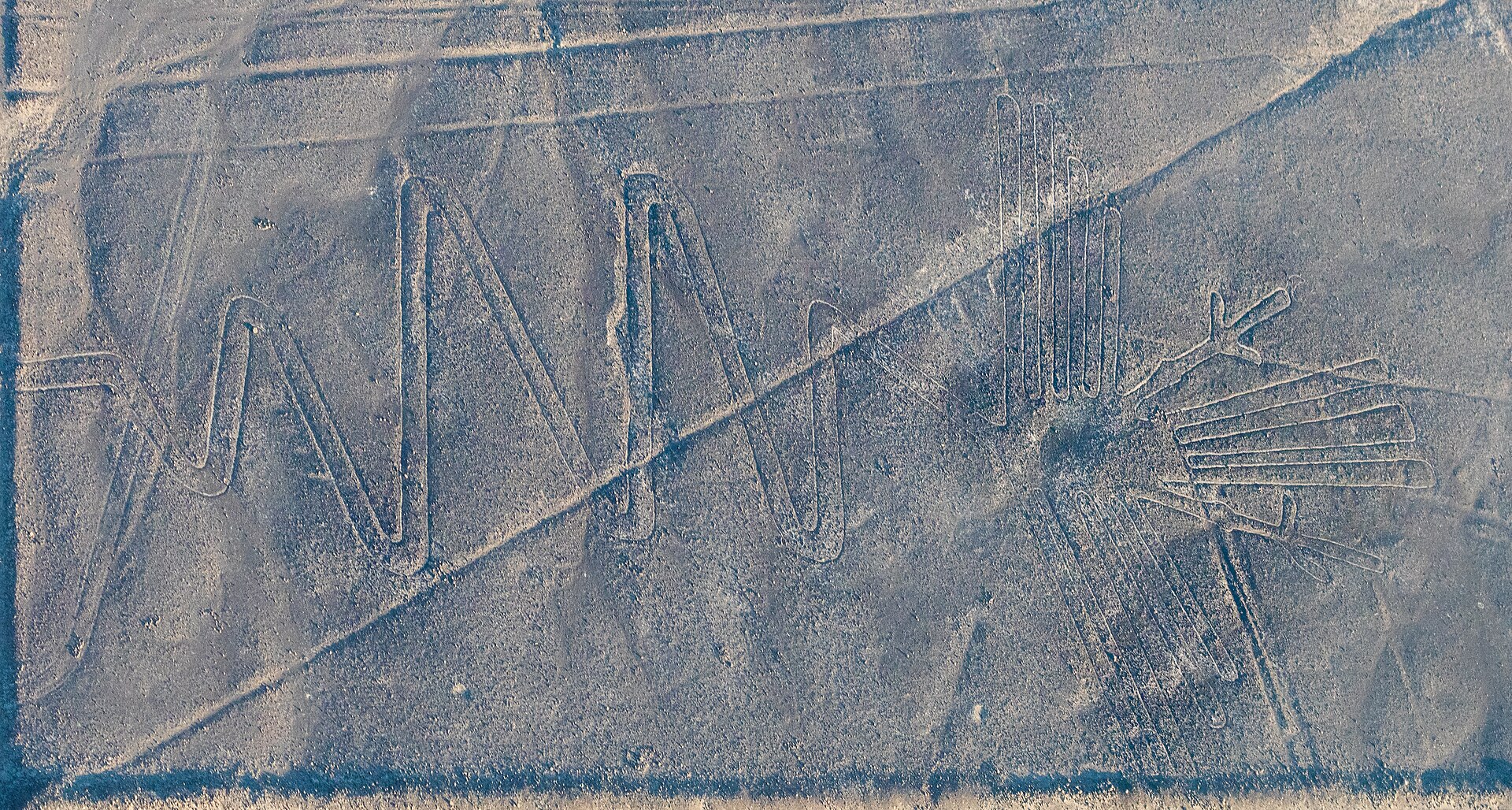
Some of the Nazca Lines are so big that you only see the whole shape from the air. A bird almost 300 metres long. A monkey. A spider. All drawn on the desert floor more than 1,500 years ago. So this guide explains how to visit the Nazca Lines on your first trip, in plain words. It also uses facts from UNESCO, Peru’s Ministry of Culture, Mincetur and PromPerú.
Want the trip planned for you? See this 10-day Machu Picchu, Paracas, Ica and Nazca trip or these Cusco and Machu Picchu tour packages. And if you plan to stop on the coast first, read our Paracas and Ballestas Islands guide.
What the Nazca Lines are
UNESCO lists the site as the “Lines and Geoglyphs of Nasca and Palpa”. It became a World Heritage Site in 1994, and the lines cover about 450 square kilometres of desert in the Ica region.
According to UNESCO, people scratched them into the ground between 500 BC and AD 500. They removed the dark surface stones to show the lighter ground below. The drawings show animals, plants, imaginary beings and geometric shapes. Some straight lines also run for several kilometres. Experts believe they had a ritual link with astronomy.
The lines are shallow, too. Mincetur says the cut is only 15 to 30 cm deep. The very dry climate has helped keep them, says UNESCO.
Who found and studied them
Mincetur’s tourism inventory gives a short history:
- 1927: Peruvian archaeologist Toribio Mejía Xesspe made the first reports. He also described them as sacred paths.
- 1930s: US archaeologist Paul Kosok studied them. Later, he saw them as a huge farming calendar.
- From 1946: German mathematician Maria Reiche began deep research. She kept studying them for the rest of her life.
Still, no one has fully explained why the lines were made. Many theories exist, but none is proven.
The famous figures
Mincetur lists more than thirty animal shapes, plus geometric and human figures. For example, these are some of the largest:
| Figure | Approximate size |
|---|---|
| Bird | almost 300 m |
| Lizard | 180 m |
| Pelican | 135 m |
| Condor | 135 m |
| Monkey | 135 m |
| Spider | 42 m |
You can also find a whale, a dog, two llamas, a hummingbird and a parrot. The lizard was cut in two when the Pan-American Highway was built. UNESCO also notes damage to some lines from the road.
How to get to Nazca
Nazca is a town on the south coast of Peru, on the Pan-American Highway. UNESCO places the site some 400 km south of Lima. By road, PromPerú lists these distances:
| Route | Distance | Approximate time |
|---|---|---|
| Lima to Nazca | 454 km | 7 h |
| Ica to Nazca | 142 km | 2 h 30 min |
| Cusco to Nazca | 660 km | 14 h |
However, times change with traffic and stops. If you go by bus, confirm the arrival time with the bus company.
Two ways to see the Nazca Lines
From a small plane
PromPerú says a small-plane flight gives the best view. Mincetur also lists flights from the María Reiche aerodrome. The 2025 PromPerú guide gives flight hours of 9:00 to 14:45, every day.
Keep these points in mind:
- Mincetur notes that flights stop when the weather is bad.
- Book with a formal company and confirm the time the day before.
- If you get motion sickness, ask your doctor for advice before you fly.
From the viewing tower
There is a metal viewing tower next to the highway. The Ministry of Culture opened the new tower in 2020, at km 424, in the El Ingenio district. It is 20 metres high, so from the top you can see three figures: the tree, the hand and the lizard.
From the tower you see only some of the figures. That is why PromPerú suggests a flight for a better view. It also lists tower hours of 6:00 to 18:00, every day, but entry is with a ticket.
Other places to visit near Nazca
PromPerú’s guide lists several sites near the town. However, all hours below come from that guide and can change.
- Maria Reiche House Museum: at km 421 of the highway. It also shows her maps, plans and photos. Open daily, 8:00 to 18:00.
- Cantalloc Aqueduct: 5 km east of Nazca. This Nasca water system still works today. You can see 17 spiral air vents. Open daily, 8:00 to 18:00.
- Chauchilla Cemetery: 27 km south of Nazca. Here, you can see 13 pre-Inca tombs with mummies, textiles and pottery. Open daily, 6:00 to 18:00.
- Cahuachi: 24 km southwest of Nazca. It is a large ceremonial centre of mud, with two flat-topped adobe pyramids. Open daily, 8:00 to 17:30.
- Antonini Museum: on Avenida La Cultura 600, in Nazca. It also shows finds from Cahuachi. Open daily, 9:00 to 19:00.
Near Palpa, north of Nazca, you can also see the Llipata geoglyphs from natural viewpoints.
Tips for your first visit
- Plan one full day. First, use the morning for the flight or the tower, and the afternoon for the museum and the aqueduct.
- Bring sun protection, because this is one of the driest places on earth, says UNESCO.
- Bring water, since the sites are in the desert. Also carry a hat.
- Respect the site. Stay on the marked paths, because UNESCO notes that Peruvian law (Law 28296) protects the lines.
- Check hours before you go. PromPerú says hours can change, so confirm with iPerú, the official tourist office.
Final word: the Nazca Lines in one day
The Nazca Lines are one of Peru’s great mysteries. A flight shows the best view, while the tower is a simple option by the road. Then add a museum or the aqueduct, and you have a full day. Plan your route from Lima with a stop on the coast, and keep a little extra time for the weather.
This is an independent travel blog, not an official tourism site. Sources: UNESCO, Mincetur, Peru’s Ministry of Culture and PromPerú, checked on 13 October 2026. Hours and rules can change, so check them before you go.