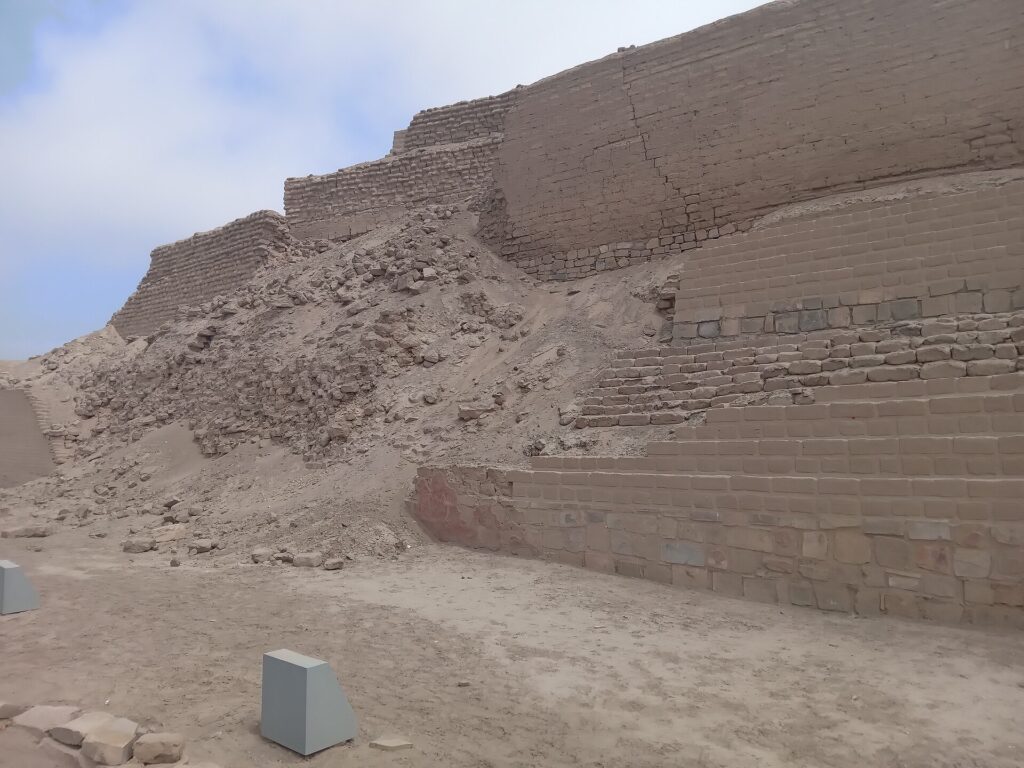
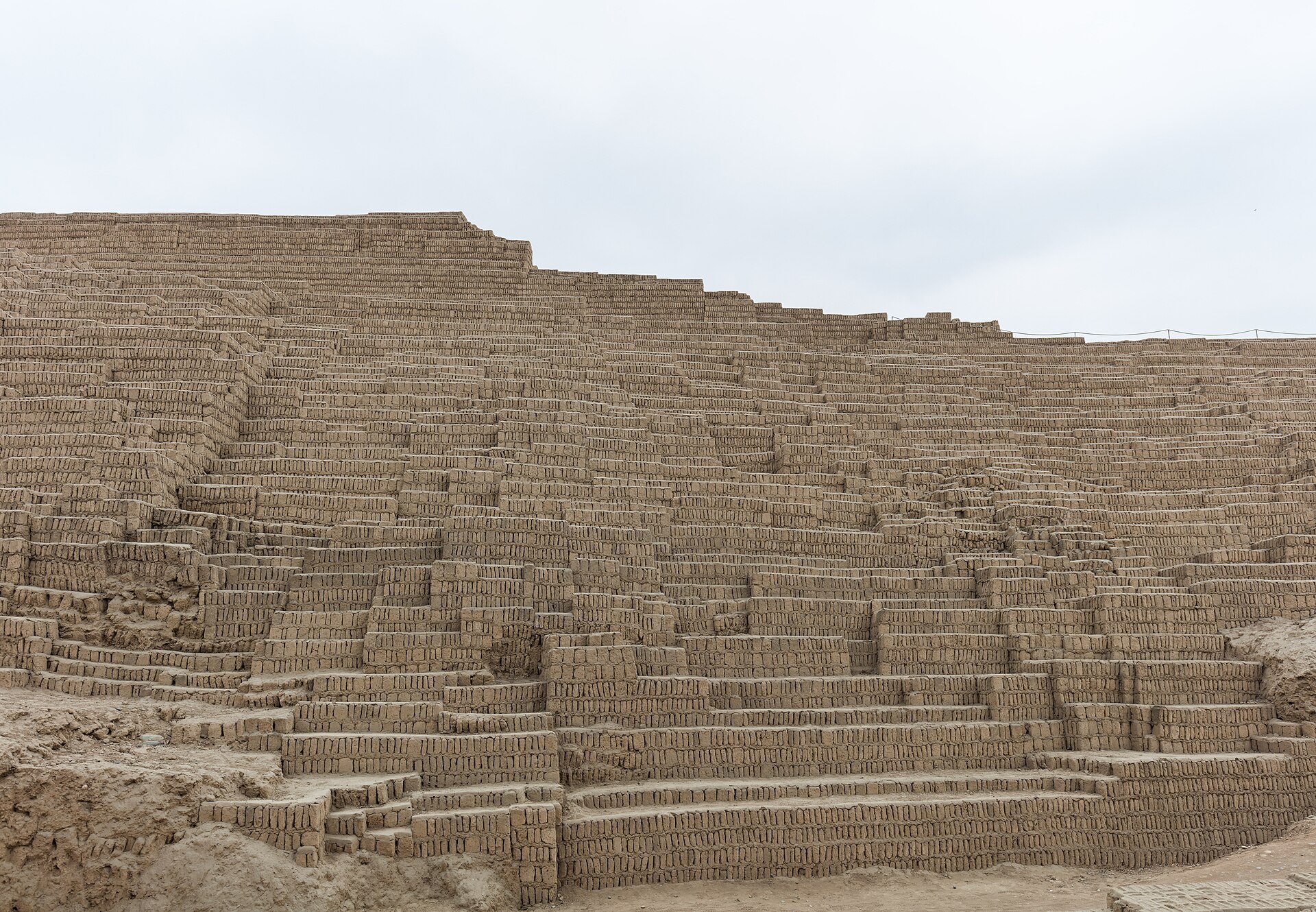
Picture a busy street in Miraflores, full of apartment blocks and cafés. Then, around a corner, a huge pyramid of mud bricks appears. It is older than the Incas by many centuries, and it sits right in the middle of modern Lima.
That pyramid is Huaca Pucllana. It is one of the easiest ancient sites to visit in Peru, because it sits inside Miraflores, a district full of hotels. This guide explains what you will see, when to go and how to get there. We used two official Peruvian sources, checked on 11 November 2026: the MINCETUR tourism inventory and the Ministry of Culture museum directory. Please note that peruvian.travel is an independent travel guide. It is not the official peru.travel site.
What is Huaca Pucllana?
Huaca Pucllana is a ceremonial center built between 400 and 700 AD by the Lima culture. According to MINCETUR, it was one of the most important pre-Inca temples in today’s Lima.
The name has a playful meaning. It comes from the Quechua word pukllay, “to play”. So a common reading is “sacred place where people play”, based on a 1999 study cited in the inventory.
After the Lima people left, the site did not stay empty. Around 850 AD, the Wari used it as a burial place. Later, from about 1100 to 1450 AD, the Ychsma people also buried their dead there and left offerings.
How big is Huaca Pucllana?
Today the protected area covers 6 hectares. However, the city has swallowed part of the old complex, so some buildings are gone.
The main structure is a long, stepped pyramid. These are its measurements, according to MINCETUR:
| Feature | Detail |
|---|---|
| Length | 300 m |
| Width | 80 m |
| Height | 25 m |
| Levels | 7 stepped platforms for ceremonies |
| Built by | Lima culture, 400–700 AD |
| Later use | Wari burials (c. 850 AD), Ychsma burials (1100–1450 AD) |
At the foot of the pyramid there were plazas with benches. In fact, these open spaces were mostly used for community activities.
The “bookshelf” walls of Huaca Pucllana
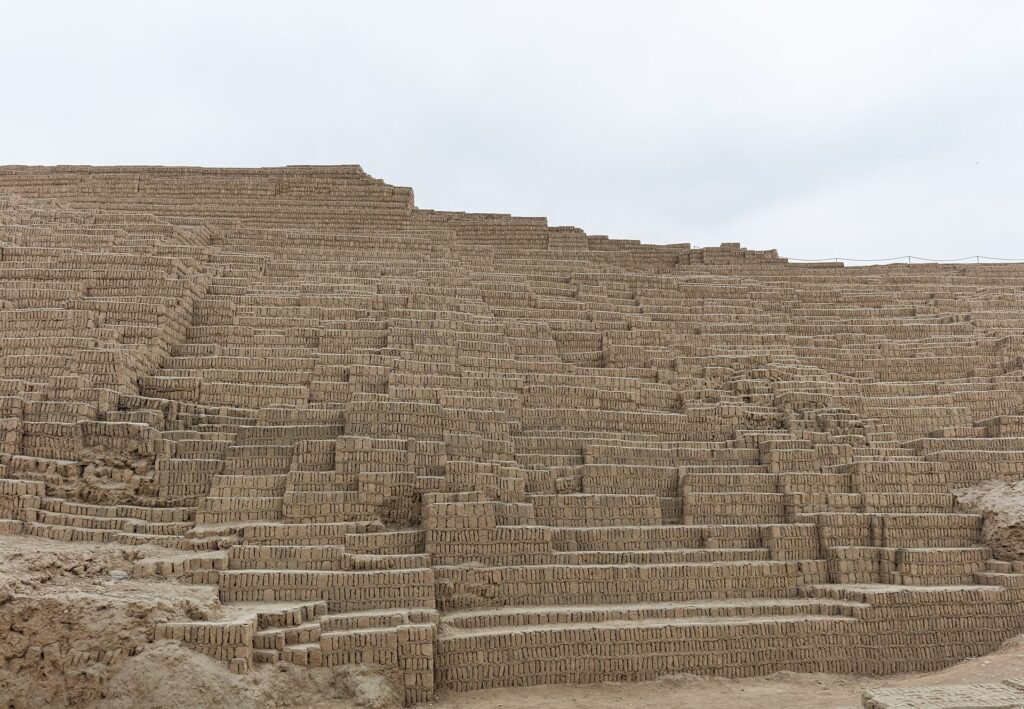
Look closely at the walls and you will notice a pattern. The small adobe bricks stand upright, side by side, like books on a shelf.
Archaeologists call this the “librero” technique, which means “bookshelf” in Spanish. It is typical of the late Lima culture. Because of this, the walls look almost like a giant library made of mud.
The site museum and the native garden
The visit includes a small site museum. It opened in 1984, after excavations that began in 1981. For about 40 years, archaeologist Isabel Flores led the research, until 2020.
The collection holds around 900 objects, such as textiles, stone tools and funerary items. Still, MINCETUR notes that many pieces are not on display yet. The plan is to show them in a new museum room.
Next, the day tour passes through a garden of native plants and animals. There you can see crops that ancient Peruvians grew, like potato, sweet potato, mashua, muña, huacatay and golden berry. You may also meet llamas, ducks and guinea pigs.
Opening hours and practical tips
These details come from the Ministry of Culture and MINCETUR:
- Address: Calle General Borgoño, block 8, Miraflores.
- Day visits: Wednesday to Monday, 9:00 am to 5:00 pm. It is closed on Tuesdays.
- Night visits: Wednesday to Sunday, 6:45 pm to 9:00 pm, except the first Sunday of each month.
- Holiday closures: 1 January, Good Friday, 1 May, 28 July and 25 December.
- Entry: with a ticket, which has day and night rates.
- Services: guided visits, toilets, workshops and a cloakroom.
Also, photography and filming may need prior permission from the museum, according to the inventory. Ask at the entrance if you plan to shoot more than casual photos.
There is also a restaurant with its own entrance and a direct view of the pyramid. Keep in mind that eating there does not include the museum visit.
Accessibility at Huaca Pucllana
The site works hard to welcome everyone. It has ramps, a wheelchair and accessible toilets, although visitors with reduced mobility can only reach the first level.
In addition, the Puckllaywasi room has tactile models and sensory stations for blind and deaf visitors. A sign language guide is available on request. In 2025, the site also received the international Tur4all accessibility award.
How to get to Huaca Pucllana
Most visitors arrive on foot or by taxi. MINCETUR lists these routes:
- From Parque del Amor: about 2.9 km on foot.
- From Parque Salazar: about 2.7 km on foot.
- By Metropolitano bus: ride to Angamos station, then walk about 1.2 km.
- From Lima’s main square: about 10.3 km by taxi, roughly 30 minutes.
If you still need a base, compare neighborhoods in our guide to Miraflores vs Barranco. Then, for a second day of culture, try our Historic Centre of Lima walking guide.
Who visits Huaca Pucllana
This site is a favorite with foreign travelers. In 2024, the Miraflores municipality counted 139,802 foreign tourists and 34,478 Peruvian tourists. So expect company during your visit.
The Ministry of Culture owns the site, while the Miraflores municipality manages its income under an agreement. All of that money goes back into the site, says MINCETUR. In 2017, it was also recognized as Cultural Heritage of the Nation.
Is Lima only your first stop? Then look at our Lima, Machu Picchu and Titicaca 13-day tour, or browse the Cusco and Machu Picchu tour packages from Fullviajes.
Before you head out
Huaca Pucllana gives you more than 1,500 years of history without leaving Miraflores. Moreover, it is close, accessible and easy to fit into a short Lima stay.
So check the opening day first, since it closes on Tuesdays. Then choose a day or a night visit, and let the bookshelf walls tell their story.