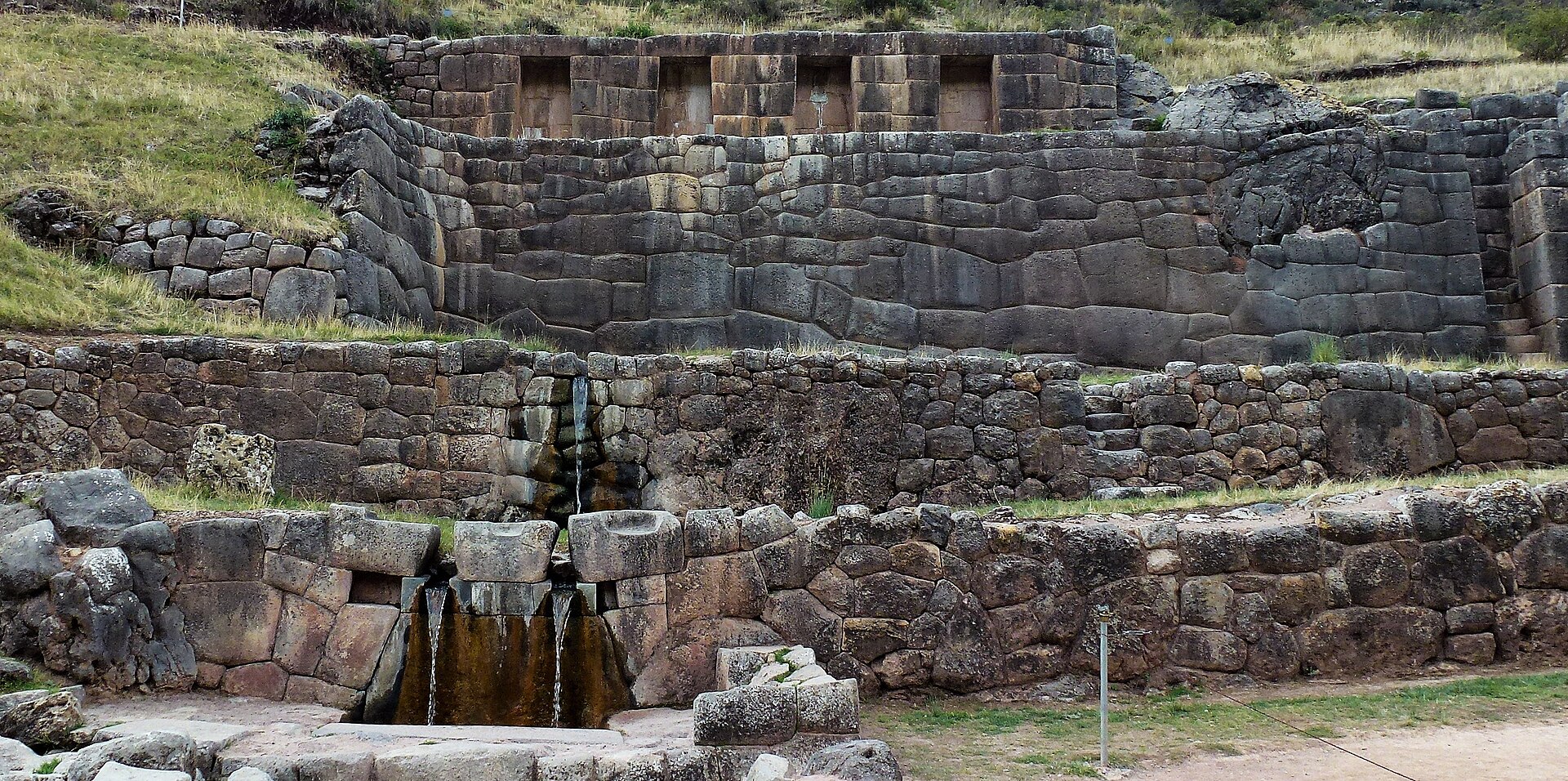
Stand still for a moment at Tambomachay and you will hear it first: water running through stone channels the Incas carved more than five centuries ago.
This guide covers what Tambomachay is, what to look for and how to plan a short visit from Cusco. We used two official sources, MINCETUR’s tourism inventory and Cusco’s regional culture office, both checked on 15 November 2026. A quick note: peruvian.travel is a private, independent guide, so it is not the official peru.travel site of the Peruvian government.
What Tambomachay Is
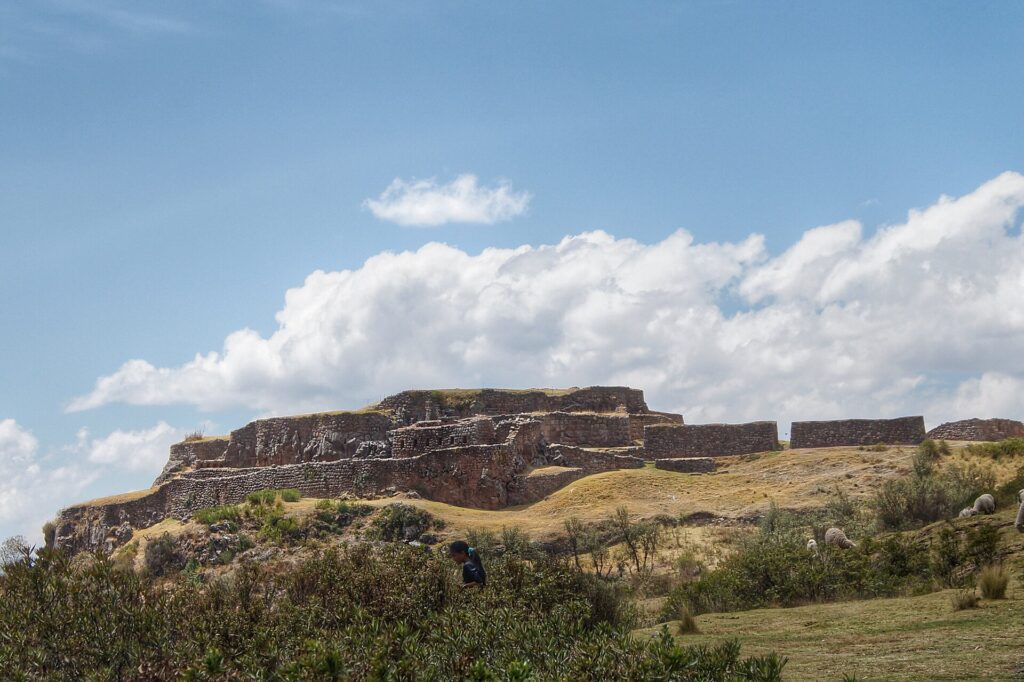
Tambomachay sits about 8 km northeast of Cusco, at roughly 3,700 m above sea level. It covers a small area of 437 square metres on a hillside above the Tambomachay river.
The name has more than one reading. According to MINCETUR, tampu means a shared lodging and mach’ay means a resting place. However, other sources translate machay as “cave”. That fits the natural rock shapes around the site.
So what was it for? The official record suggests it may have been a favourite bath of the Inca. At the same time, it was part of the defence of the Cusco valley. Above all, it is linked to the worship of water.
In addition, chronicles describe the area as a hunting ground of Inca Yupanqui. It was also one of the shrines on the first ceque line of the Antisuyo, one of the four Inca regions.
What to See at Tambomachay
The site is small, so you can see everything in under an hour. Still, the details reward a slow look.
The table sums up what MINCETUR describes:
| Feature | What it is | What to notice |
|---|---|---|
| Stepped walls | Four walls built against the hill | Three parallel terraces |
| Upper wall | About 15 m long and 4 m high | Four large trapezoid niches |
| Aqueducts | Two channels carved in the rock | Water flows all year |
| Lower pool | A small stone basin | Likely used in water rituals |
| Doorway | A double-jamb door | Leads to a room where water rises from the ground |
The water system
Water is the real star here. According to MINCETUR, two carved channels carry clean water from a higher pool. Then the water drops into a small stone basin on the lowest level.
Interestingly, no one has confirmed where the spring comes from. Some think the gentle slope cannot produce so much water. Instead, it might come from the other side of the river.
The double-jamb doorway
Look for a door with two frames, one inside the other. The Incas used this style to mark important places. Behind it, a small room shows water coming up from the earth.
How to Get to Tambomachay from Cusco
Tambomachay lies inside the Saqsaywaman Archaeological Park. The regional culture office says the park holds 96 archaeological sites, including Q’enqo and Tambomachay.
One paved road crosses the park towards the Sacred Valley. Along the way, it passes Q’enqo, then Puka Pukara and finally Tambomachay. In fact, Puka Pukara is only about 1 km away, so many visitors see both together.
According to MINCETUR, the trip from Cusco takes about 15 to 20 minutes on a paved road. The official route is listed by tour bus.
Tickets and Opening Hours at Tambomachay
You need a ticket to enter. MINCETUR lists Tambomachay under the Cusco Tourist Ticket (Boleto Turístico), in both the full and partial versions. Our Cusco Tourist Ticket guide explains which one fits your plans.
MINCETUR lists opening hours of 8:00 to 16:00, all year round. Because hours can change, check again at your hotel or the ticket office.
Is Tambomachay Worth Visiting?
Yes, especially if you like engineering. The stonework is precise, and the water still flows the way it was designed to.
Also, the official inventory compares its fine fountain to the so-called Bath of the Ñusta in Ollantaytambo. Both show joined stones, carved edges and small drains. So if you plan to visit the Sacred Valley later, Tambomachay is a good first lesson.
On the other hand, do not expect a big complex. It is a short stop, not a full-day site. For that reason, it works best as part of a route with other ruins in the park.
Tips for First-Timers
Tambomachay gets plenty of visitors. According to MINCETUR, more than 276,000 foreign visitors came in 2018. Therefore, arriving early usually means fewer people.
A few practical tips:
- Go slowly. At 3,700 m, even short walks can feel hard. Simple tips on altitude sickness in Peru can help.
- Bring a light jacket and sunscreen. The sun is strong, but the wind can be cold.
- Hire a guide if you want the stories behind each wall. MINCETUR lists guiding in English and Spanish.
- Pair it with Sacsayhuaman, the largest site in the same park.
Prefer to leave the logistics to someone else? Fullviajes sells Cusco and Machu Picchu tour packages. For more time in the south, there is also a 14-day route via Arequipa, Puno and Cusco.
Final Word
Tambomachay is short, quiet and full of meaning. It shows how the Incas treated water: as something sacred, not just useful.
So when you get there, find the channels first. Then listen for a minute. That sound is the best part of the visit.