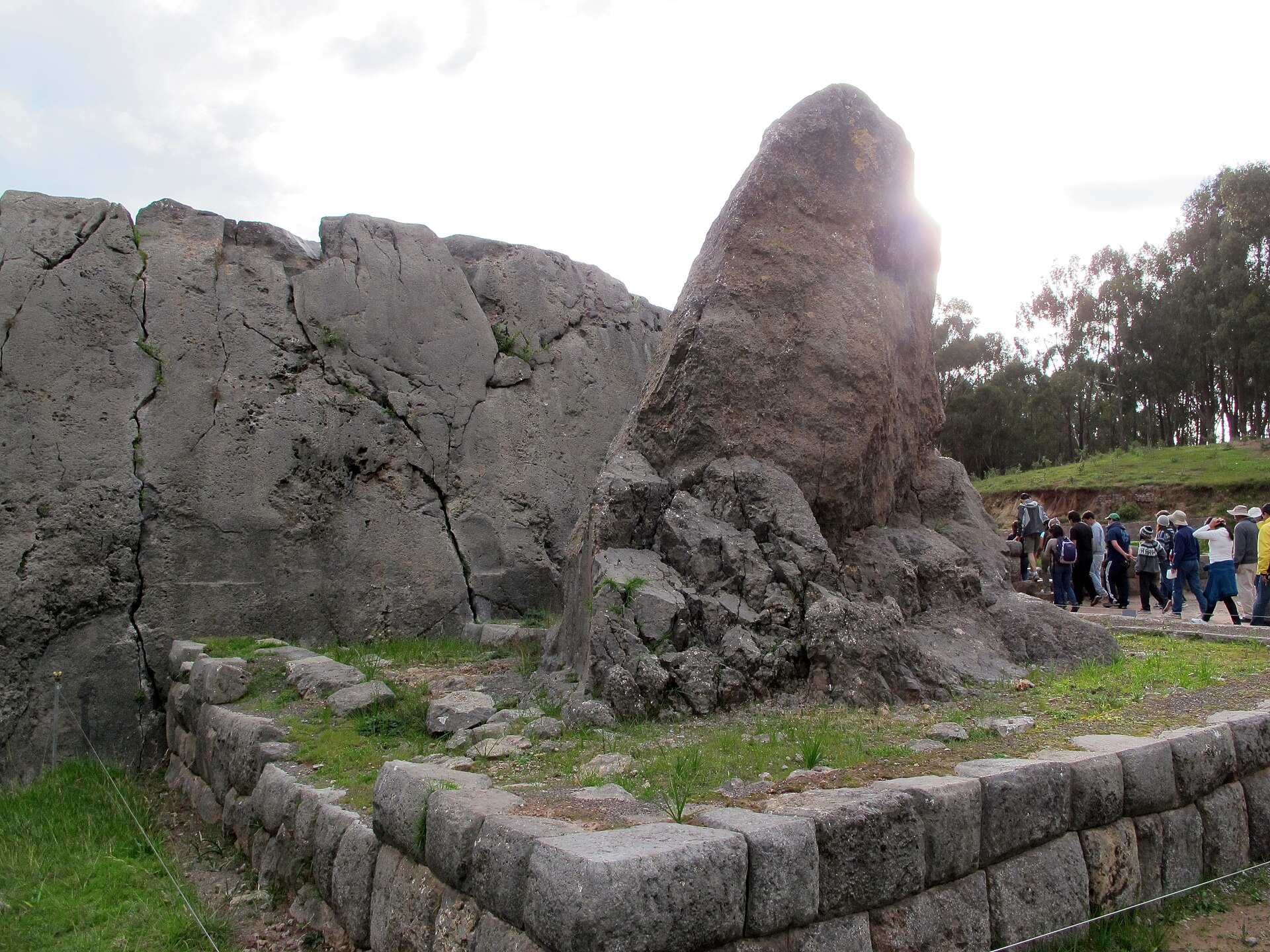
Walk through a maze-like passage in a giant limestone rock. At the end, you find a chamber with a stone table carved straight out of the bedrock.
That is Q’enqo, one of the strangest Inca sites around Cusco. Its name comes from the Quechua word q’inqu, which means “labyrinth”. Below you will find the main sights, the route from the city and the pass that covers entry. Our facts come from three official bodies: MINCETUR’s tourism inventory, Cusco’s regional culture office and the Cusco Tourist Ticket board. We checked them on 16 November 2026. Please note: peruvian.travel is run independently. We are not the official peru.travel site and we do not speak for the Peruvian government.
What Q’enqo is
Q’enqo sits on Socorro hill, about 4 km northeast of Cusco’s historic centre, according to MINCETUR. It stands at 3,580 m above sea level. So if you have just arrived, take it slowly.
The site was likely built in the 15th and 16th centuries, under Inca Pachacútec and the rulers who followed him. Rather than a city, it was a place for rituals. In fact, MINCETUR links it to religious, funerary and astronomical practices.
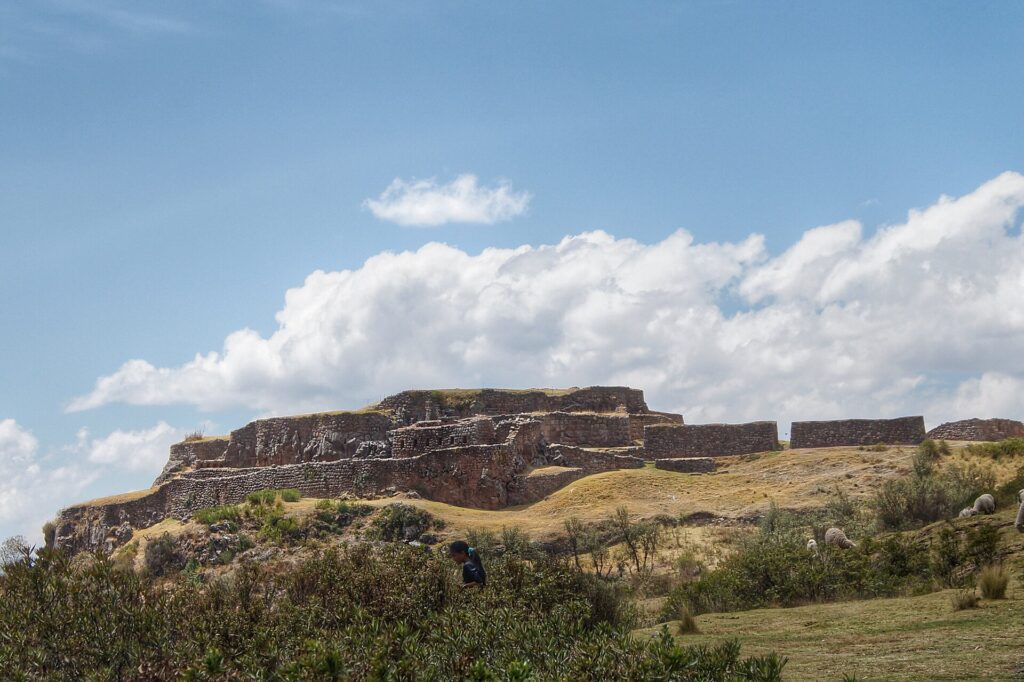
It also belongs to the Saqsaywaman Archaeological Park. According to Cusco’s culture office, the park has 96 archaeological sites. Q’enqo is one of the best known, along with Tambomachay and Puka Pukara.
What to see at Q’enqo
Most of Q’enqo is carved into the rock itself instead of being built with blocks. Because of that, the stone has survived well. The site has two parts: Q’enqo Grande, with the main structures, and Q’enqo Chico, about 350 m away, with terraces and retaining walls.
The amphitheatre and the monolith
First, look for the semicircular amphitheatre. MINCETUR says it is about 55 m across, with 19 niches around it. The niches may have held idols or mummies.
In the middle stands a stone monolith up to six metres tall. It is believed to have represented a deity or Pachamama, Mother Earth. However, its exact meaning is still an interpretation.
The zigzag channels and the Intihuatana
Next, climb to the top of the rock. Here you will see small channels carved in a zigzag shape. According to MINCETUR, they were probably used for ritual offerings of liquids such as chicha.
Nearby is an Intihuatana, a spot used to track the movement of the sun. During the winter solstice, the light creates shadows that some people read as the shape of a puma. Still, that reading is an interpretation, not a proven fact.
The underground chamber
Finally, go inside the rock. The underground chamber has a two-level table and side niches, all cut from the bedrock. MINCETUR suggests it was used for funerary rites, mummification and sacrifices.
There are also tunnels inside the rock. In Inca belief, the world had three levels: Hanan Pacha above, Kay Pacha on earth and Ukhu Pacha below. These passages may have been seen as links between them.
Q’enqo at a glance
Here is a quick summary, based on the official records:
| Topic | What the sources say |
|---|---|
| Location | Socorro hill, about 4 km northeast of the historic centre |
| Altitude | 3,580 m |
| Sectors | Q’enqo Grande and Q’enqo Chico, about 350 m apart |
| Highlights | Amphitheatre with 19 niches, monolith, zigzag channels, underground chamber |
| Ticket | Cusco Tourist Ticket (general or partial) |
| Hours listed by MINCETUR | Every day of the year, early morning to mid-afternoon |
How to get to Q’enqo from Cusco
You have two simple options. MINCETUR lists a route of 6.6 km by tour bus from the Plaza de Armas, which takes about 25 minutes. It also lists a walking route of 2.4 km, in about 36 minutes.
If you walk, remember that the route goes uphill. Therefore, it is better to walk on your second or third day, after your body adjusts. Our guide to altitude sickness in Peru has simple tips.
By road, Cusco’s culture office describes the route along Avenida Circunvalación toward the Sacred Valley. Along the way you pass Q’enqo first, and later Puka Pukara and Tambomachay. As a result, many travellers visit Q’enqo on the same trip as Sacsayhuamán and the other nearby ruins.
Tickets and hours for Q’enqo
Q’enqo is part of the Cusco Tourist Ticket. MINCETUR lists both the general ticket and the partial ticket for this circuit. You can read what each option covers in our Cusco Tourist Ticket guide.
As for hours, MINCETUR lists the site as open all year, from 6:00 a.m. to 4:30 p.m. Times may vary, though. Confirm them in Cusco before your visit.
Tips for your visit
- Go early, so you have time to explore without rushing.
- Wear shoes with good grip, since the rock can be smooth and uneven.
- Carry water and sun protection, because the altitude is high.
- Hire a guide in Cusco if you want the full story; MINCETUR notes guiding in Spanish, English and other languages in the city.
If you prefer a planned trip, Fullviajes offers Cusco and Machu Picchu packages. For a longer route, see this 14-day itinerary through Arequipa, Puno and Cusco.
Before you head out
Q’enqo is small, but it says a lot about Inca beliefs. In one short visit, you can see an amphitheatre, a sacred monolith, ritual channels and a chamber carved inside the rock.
So pack your ticket, start early and take your time. Then step into the rock and explore the labyrinth for yourself.