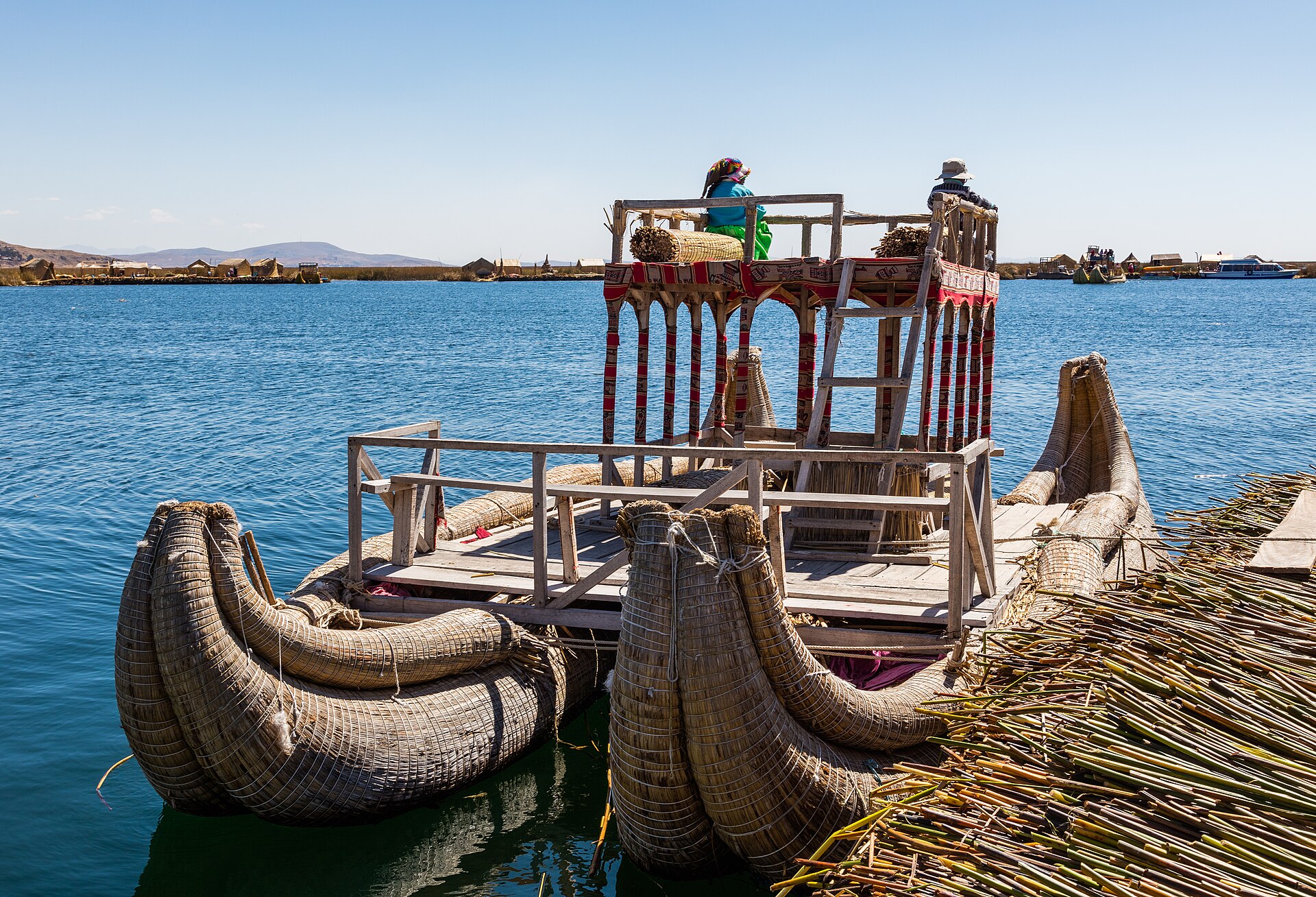
Lake Titicaca is so high that your boat floats at about 3,810 meters above sea level. It is the highest navigable lake in the world, and Peru shares it with Bolivia. This guide explains how to plan Lake Titicaca from Puno. It covers how to get there, which islands to see and how many days you need. The facts come from PromPerú’s official Puno guide.
Want to put Titicaca in a bigger trip? See this 13-day Lima, Machu Picchu and Titicaca itinerary or this 14-day Arequipa, Puno and Cusco itinerary. You can also compare these Cusco and Machu Picchu tour packages.
Lake Titicaca basics for first-timers
First, the city of Puno is the usual base. PromPerú gives its height as 3,827 meters above sea level. The lake itself, however, is at about 3,810 meters.
Here is what PromPerú says about the lake:
- It is the highest navigable lake in the world.
- Peru and Bolivia share it.
- In addition, on the Peruvian side there are natural islands like Amantaní, Taquile, Tikonata and Suasi.
- There are also man-made islands, like the Uros.
- In Andean stories, Manco Cápac and Mama Ocllo came out of its waters.
So at this height, take the first day slowly. If you feel the height, our altitude sickness guide for Peru has simple tips.
How to get to Puno for Lake Titicaca
PromPerú lists these routes and times:
| From | How | Time |
|---|---|---|
| Lima | Flight to Juliaca | 1 h 40 min |
| Juliaca | Road to Puno (44 km) | 50 min |
| Cusco | Road via Juliaca (389 km) | 7 h |
| Cusco | Train | 10 h |
| Arequipa | Road via Juliaca (325 km) | 6 h |
Juliaca is where the flight from Lima lands. For other ways to move around the country, read our guide to getting around Peru.
How many days do you need at Lake Titicaca
Next, PromPerú suggests a minimum stay of 3 days in Puno. Its guide splits the visits like this:
| Time | Suggested visit |
|---|---|
| Half day | Puno city: main square, cathedral, museums, lake port |
| Half day | Sillustani and other ruins |
| Half day | Uros floating islands and nearby islands |
| 1 day | Titicaca National Reserve, Taquile and Tikonata |
| 2 days | Suasi, Amantaní and the Capachica peninsula |
If you only have two days, a simple option is the Uros and Taquile. If you have three days, add Sillustani. This is our suggestion, not an official plan.
The Uros floating islands
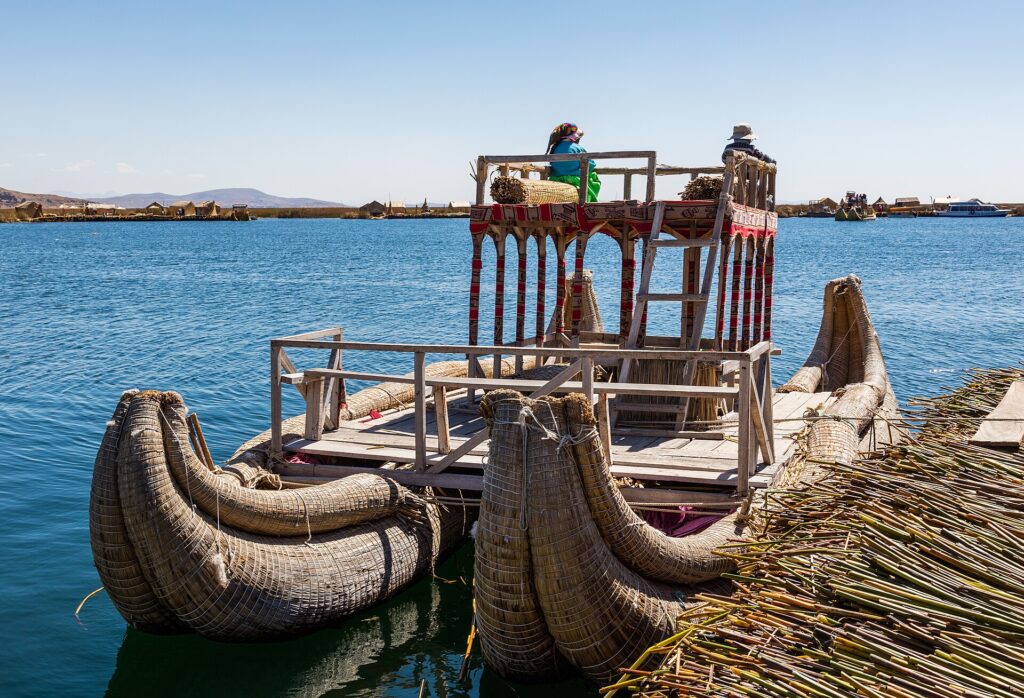
Next, the Uros are about 5 km east of the Puno port. By motorboat it takes around 20 minutes.
PromPerú says there are more than 100 islands, with Uro-Aymara families. For example, homes are built and roofed with mats of totora, a reed that grows in the lake. Also, people fish, make crafts and offer rides on totora boats.
Taquile and Amantaní islands
Taquile is about 35 km east of the Puno port. PromPerú gives 3 hours by regular boat or 1 hour 30 minutes by fast boat. Temperatures there range from 7 °C to 23 °C, so pack a warm layer. Its people are known for fine textile art, which UNESCO lists as intangible cultural heritage.
Amantaní is about 36 km northeast of the port, around 3 hours 30 minutes by motorboat. It also sits at 3,817 meters and has ten communities. Locals grow potatoes, maize and quinoa, and make textiles and stone crafts. Also, there are two natural viewpoints at the highest point.
PromPerú also lists homestay tourism in the Capachica peninsula and in Llachón, where local families open their homes to visitors.
Sillustani: stone towers near Puno
Sillustani is 34 km north of Puno, about 35 minutes by car. PromPerú says it has stone burial towers called chullpas, up to 12 meters tall. They held the remains of leaders of the Colla people.
PromPerú lists the hours as daily from 8:30 a.m. to 5:30 p.m. You also need a ticket. Hours can change, so confirm before you go. You can also take boat rides on Lake Umayo.
What to eat near Lake Titicaca
Also, PromPerú mentions Andean grains in local dishes. Examples are quinoa puree, quinoa porridge and a soup called chairo. It also lists roast lamb (kancacho), fried alpaca and a trout dish. Finally, it recommends trying the high-quality organic coffee grown in the region.
When to go to Lake Titicaca
PromPerú’s agenda lists two big dates in Puno city:
- February 1 to 14: the Virgen de la Candelaria festival.
- November 3 to 5: the anniversary of the founding of Puno.
If you want festival crowds, plan around them and book early. Otherwise, avoid those dates.
For a general view of seasons across Peru, see our guide to the best time to visit Peru.
Mistakes to avoid at Lake Titicaca
- Skipping rest on day one. Puno is above 3,800 meters, so go slowly.
- Trying to see everything in one day. Instead, PromPerú suggests at least 3 days.
- Forgetting boat times. Taquile and Amantaní take hours, not minutes, because they are far from the port.
- Packing only light clothes. Taquile can be as cool as 7 °C.
- Ignoring festival dates. Puno city has big events in February and early November.
Final word: Lake Titicaca in plain words
Lake Titicaca is easy to enjoy if you plan three simple things. Decide how you reach Puno, how many days you stay and which islands you pick. First, start with the Uros, then add Taquile, and give your body time to adjust to the height.
This is an independent travel guide. It is not the official peru.travel site. Facts come from PromPerú’s Puno guide, published on gob.pe (2023). Times and hours can change, so check them again before you travel.