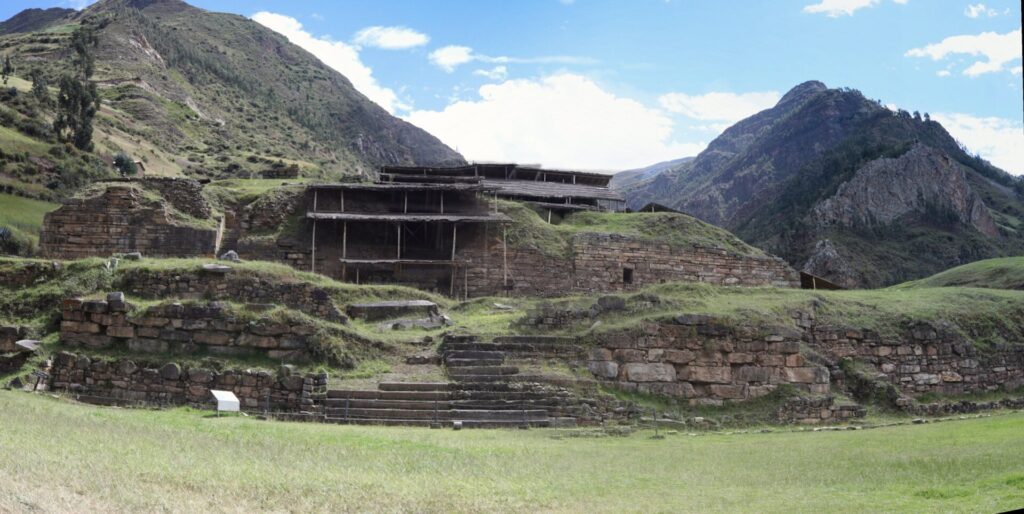
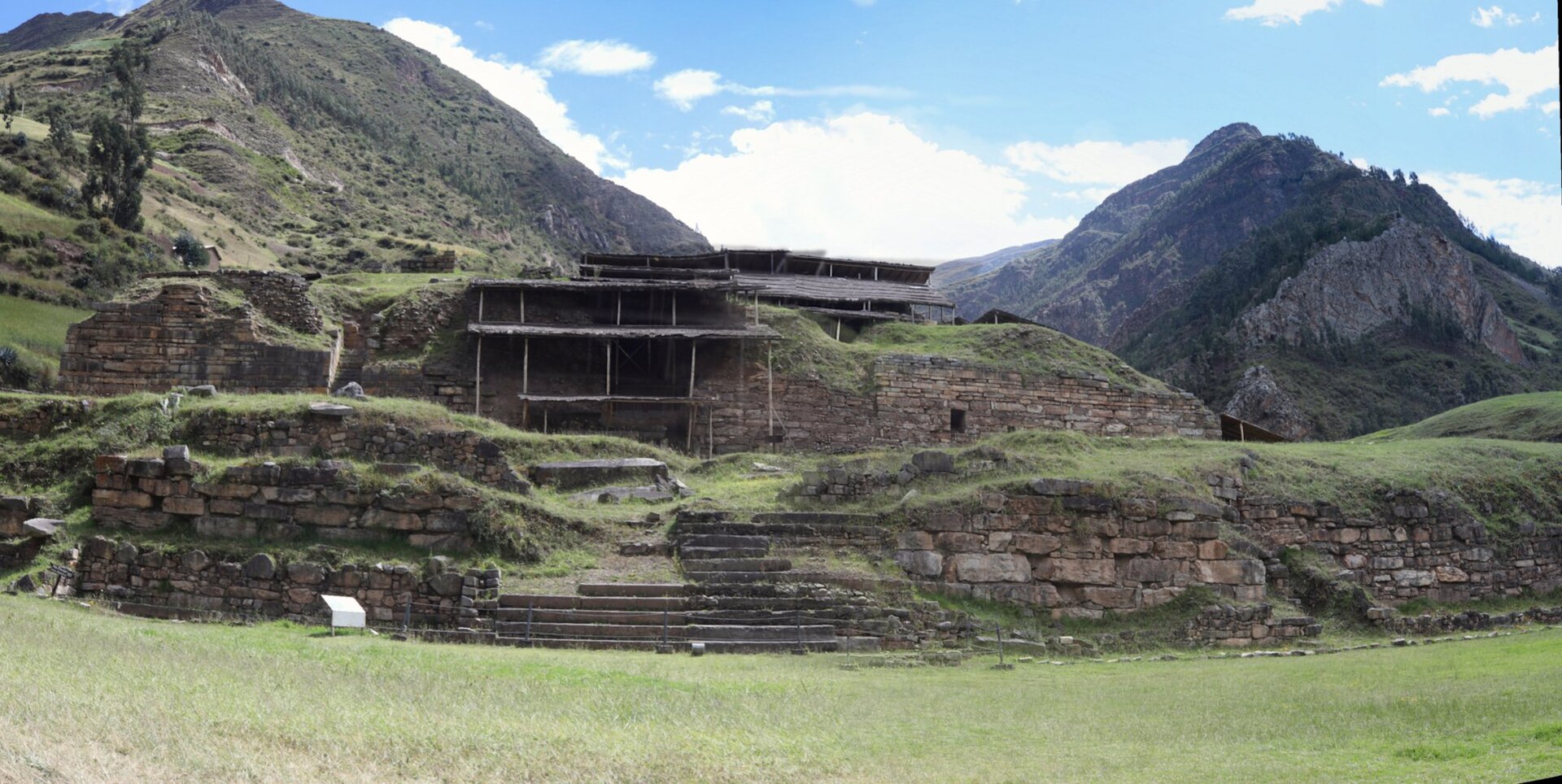
High in the Andes, an old stone temple hides dark tunnels lit only by daylight. This is Chavin de Huantar, a ceremonial centre more than 3,000 years old. It sits in the Ancash region, about three hours by road from Huaraz.
This guide covers what to see at Chavin de Huantar, opening hours, how to get there and how to prepare. Every fact here was checked on 27 October 2026 against UNESCO, MINCETUR, PromPerú and the Ministry of Culture. One more thing: peruvian.travel is a privately run website, not the official peru.travel site, so confirm key details locally.
What is Chavin de Huantar?
The site gave its name to the Chavin culture. According to UNESCO, that culture developed between 1500 and 300 BC in a high valley of the Peruvian Andes. Chavin was a centre of worship and pilgrimage. In fact, people came from far away and spoke different languages.
UNESCO added Chavin to its World Heritage List in 1985. Today, Peru’s Ministry of Culture manages and protects it. The ruins stand at about 3,180 metres above sea level, where the Huachecsa and Mosna rivers meet.
What to see at Chavin de Huantar
First, you will see terraces and plazas surrounded by buildings of cut stone. However, the most memorable part is underground. A network of galleries runs inside the temple, with vents and drains that UNESCO calls unique in South America.
Here are the main features to look for:
| Feature | What it is |
|---|---|
| Lanzon | A granite monolith about 4.5 m tall, deep inside the Old Temple |
| Tenon heads | Carved stone heads that once hung on the outer walls |
| Circular Plaza | A sunken plaza, listed by UNESCO among the key works |
| Falconidae Portico | A carved doorway, uncovered while clearing mud from a 1945 flood |
| Underground galleries | Passages lit by sunbeams that enter through ducts |
The Lanzon
The Lanzon is the star of the visit, since it is the most famous carving. It shows a being with feline fangs, clawed hands and snake-like hair. PromPerú notes that it stands in the deepest of the 14 underground galleries of the Old Temple. For this reason, some archaeologists see it as the key religious image of the Chavin culture.
The tenon heads
Like the Lanzon, these stone heads have bulging eyes and sharp fangs. Originally, they were set high on the walls of the New Temple. Today, according to PromPerú, only one remains in its original place.
The Raimondi Stela
One famous Chavin carving is not at the site. The Raimondi Stela, which shows the Staff God, is kept at the National Museum of Archaeology, Anthropology and History of Peru. So, if you pass through Lima, you can see it there.
Chavin de Huantar opening hours and tickets
According to MINCETUR, the site opens from Tuesday to Sunday, 9:00 am to 4:00 pm. However, it is closed on Mondays. After you arrive, you buy your ticket at the main entrance.
Nearby, the Chavin National Museum keeps the same days and hours. It holds many pieces found at the site. Its ticket is separate and is sold at the museum door.
Both places offer reduced rates for students, minors and some other groups. Since rates can change, check the current ones when you arrive. Also, PromPerú warns that areas under excavation may be closed to visitors.
How to get to Chavin de Huantar
Most travellers start from Huaraz, the main city of Ancash, because it is the closest base. According to MINCETUR, these are the usual routes:
- Public bus from Huaraz to the Chavin bus terminal: 107 km, about 3 hours on a paved road.
- Walk from the Chavin terminal to the site: 1 km, about 13 minutes.
- Tourist bus from Huaraz to the site: 107 km, about 3 hours and 15 minutes.
Coming straight from Lima? PromPerú says the trip is about 500 km. First, you follow the North Pan-American Highway to km 196, near Pativilca. Then you climb on mountain roads to Catac, and from there you continue to Chavin.
Tips for visiting Chavin de Huantar
At over 3,000 metres, the altitude can affect you. Therefore, take it slowly during your first days in the highlands. For simple advice, read about altitude sickness in Peru explains what helps.
A few more practical tips:
- Start early, because the site closes at 4:00 pm.
- Visit both the temple and the museum, since many carvings are kept in the museum.
- Expect dim light inside the galleries, as only sunbeams through the ducts light them.
- Base yourself in Huaraz, because the round trip takes most of a day.
- Remember that Monday is closing day at both places.
If you need help moving between regions, see our Peru transport guide for first-timers.
Before you head out
Chavin de Huantar is one of the oldest and most striking sites in Peru. As a result, it rewards travellers who make the trip deep into the Andes. Check that it is not a Monday, leave Huaraz early and save time for the museum.
If you are planning a longer trip, you may also want to see Cusco. Fullviajes offers Cusco and Machu Picchu tour packages in English. Or look at the 13-day trip covering Lima, Machu Picchu and Titicaca.