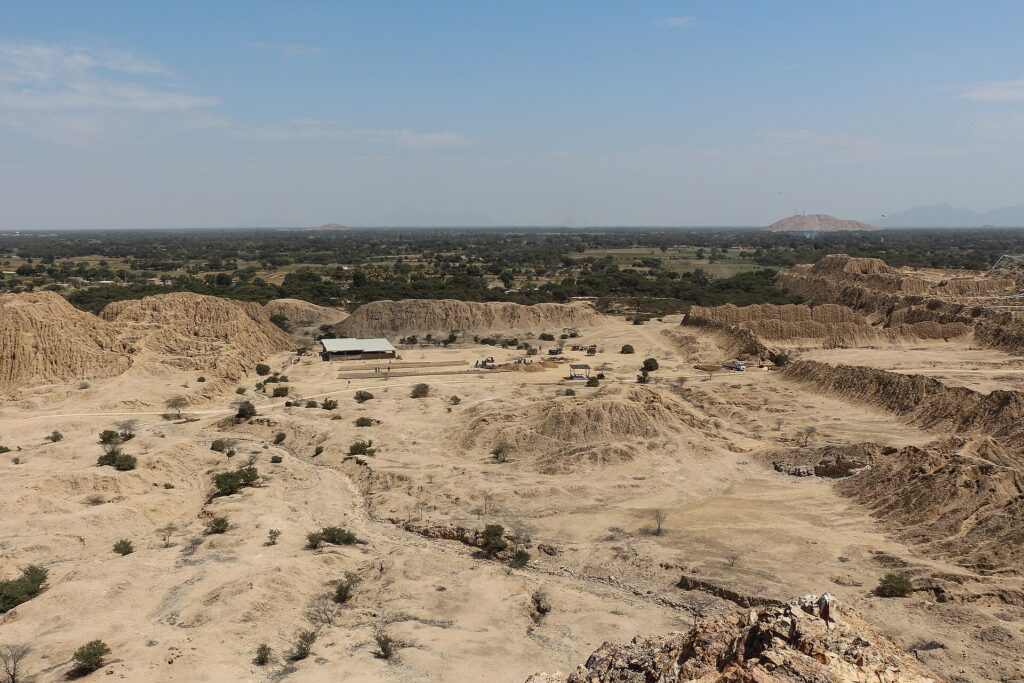
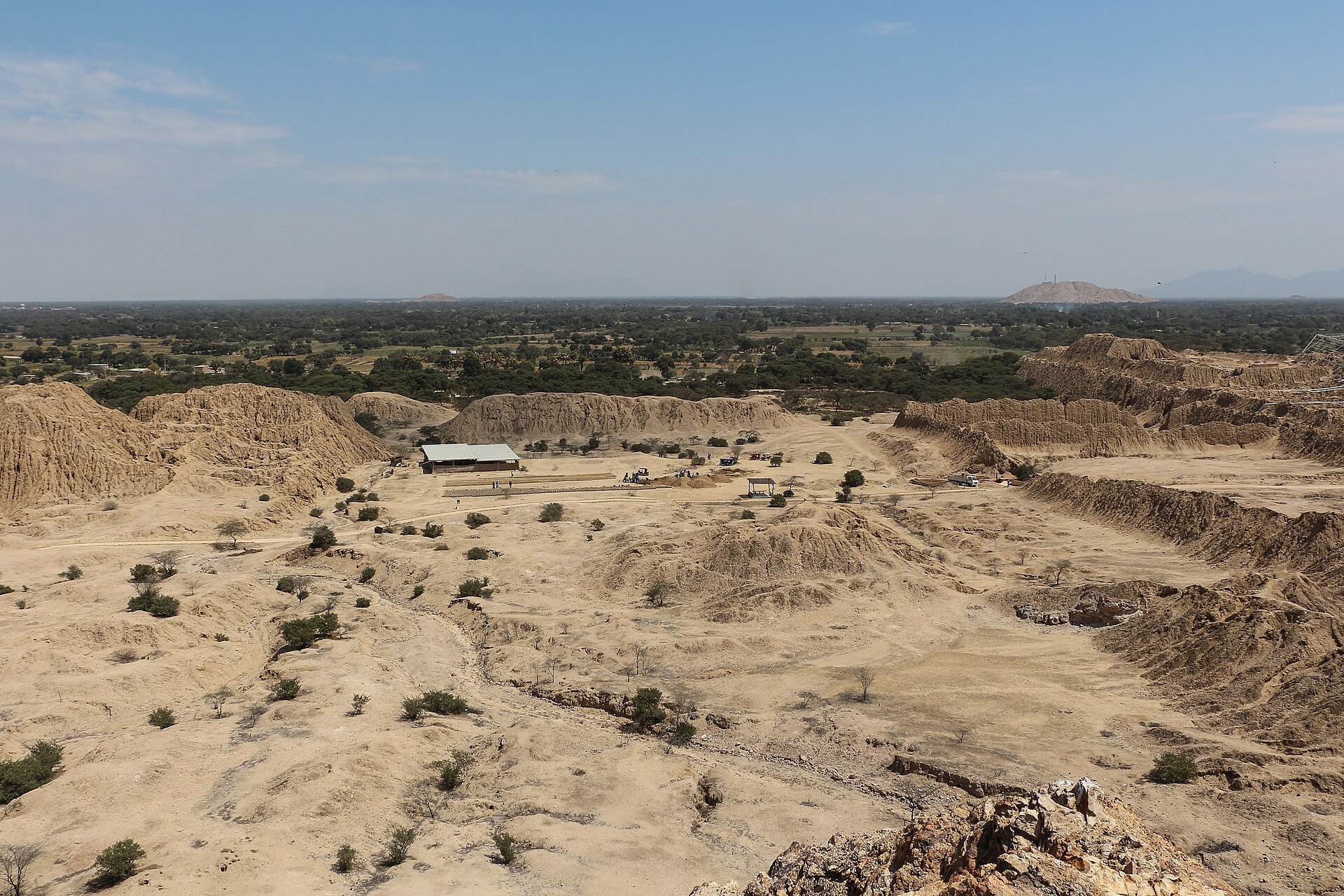
Picture 26 ancient pyramids spread around a single hill in a flat valley. That is Túcume, in Peru’s Lambayeque region. Most visitors to northern Peru see the gold of Sipán first. Yet this quiet site shows you the scale of the cultures that built it.
This guide explains what to see, when to go and how to get there from Chiclayo. Every fact comes from Peru’s Ministry of Culture and MINCETUR, the tourism ministry. Please note: peruvian.travel is an independent guide, and it is not the official peru.travel site.
What is Túcume?
Túcume is a large archaeological complex in the district of the same name, in Lambayeque. According to the Ministry of Culture, 26 pyramids make up the complex. They surround Cerro Purgatorio, a hill that rises over the flat valley.
Because of them, the site is known as the Valley of the Pyramids. Its collection covers the last phase of the Lambayeque culture. After that, the Chimú, the Inca and the colonial period left their mark too.
Quick facts
| Item | Detail |
|---|---|
| Location | Campiña de San Antonio s/n, Túcume, Lambayeque |
| Altitude | About 49 m above sea level (MINCETUR) |
| Open | Tuesday to Sunday, from 9:00 a.m. |
| Closing time | 5:00 p.m. on the museum page; 4:30 p.m. in a January 2026 notice |
| Distance from Chiclayo | About 33 km |
| Run by | Peru’s Ministry of Culture |
| Visitors in 2024 | 44,266 Peruvian and 2,253 foreign tourists (MINCETUR) |
The Túcume site museum
First, the visit starts at the site museum, at the foot of Cerro Purgatorio. MINCETUR explains that it grew out of the Túcume Archaeological Project, which ran from 1989 to 1994. The project was a partnership between the Kon-Tiki Museum in Oslo and Peru’s former National Institute of Culture. In fact, the explorer Thor Heyerdahl was the driving force behind it.
Next, look at the building itself. Architect Jorge Cosmópolis Bullón designed it after the old colonial ramadas of northern Peru. He used cane, mud, adobe and carob-wood columns. As a result, the museum blends into the dry landscape around it.
What you will see inside
The museum holds more than 1,500 objects found during excavations at the site. MINCETUR lists these highlights:
- Jewels and funerary goods of the so-called Lord of Túcume.
- Textiles, pottery and metalwork.
- Objects linked to traditional healers, which show how local customs survived.
- Interactive models of the main pyramids.
- A timeline that places local history next to world history.
Also, the Ministry of Culture notes that the museum explains metalworking step by step. It starts with mining the metal and ends with the finished piece.
Huaca Las Balsas: the mud reliefs
After the museum, do not miss Huaca Las Balsas. For the Ministry of Culture, it ranks among the key sectors of the complex. Inside, a room is richly decorated with mud reliefs, so take your time there.
These reliefs show myths and rituals. In particular, they link to the legend of Naylamp, the “water bird”, and to other figures of the Lambayeque culture.
Visiting routes at Túcume
MINCETUR describes three official routes: North, South and Integral. Together, they cover the museum halls, learning trails, a plant nursery, viewpoints, craft workshops and monumental areas such as Huaca Las Balsas.
So which one should you pick? If you have only a short time, choose one of the shorter routes. On the other hand, if you want the full picture, the Integral route combines everything. Ask at the ticket office which areas are open on the day you visit.
A museum run with the community
However, Túcume is more than a museum. In 2015, it adopted a community model known as the Túcume Ecomuseum. According to MINCETUR, it brings together 35 local groups. These include cultural, educational, religious and farming groups, plus small businesses that offer lodging, food, transport, crafts and guiding.
That same year, the British Guild of Travel Writers named it the best worldwide tourism project. Because of this, buying crafts or a meal in town helps local families directly.
How to get to Túcume from Chiclayo
Most travellers stay in Chiclayo, since it is the main city of the region. MINCETUR lists these options:
| Route | Transport | Distance and time |
|---|---|---|
| Chiclayo to Túcume town | Combi (minibus) from Av. Augusto B. Leguía 1280 | 33 km, about 50 min |
| Túcume town to the museum | Mototaxi | 2 km, about 5 min |
| Chiclayo main square to the museum | Taxi or private car | 33 km, about 40 min |
New to buses, combis and taxis here? Our Peru transport guide for first-timers explains the basics.
Opening hours and when to visit Túcume
The Ministry of Culture museum page lists Tuesday to Sunday, 9:00 a.m. to 5:00 p.m. However, a January 2026 Ministry notice gives 9:00 a.m. to 4:30 p.m. for the visit. To be safe, arrive in the morning.
Also, the museum usually closes on Mondays. Still, the museum opens on some Mondays that are holidays. The museum page names 29 June, 27 July and 2 November.
MINCETUR says you can visit all year. Much of the visit is outdoors, so bring a hat, sunscreen and water. Also wear comfortable shoes for the trails.
Combine Túcume with other northern sites
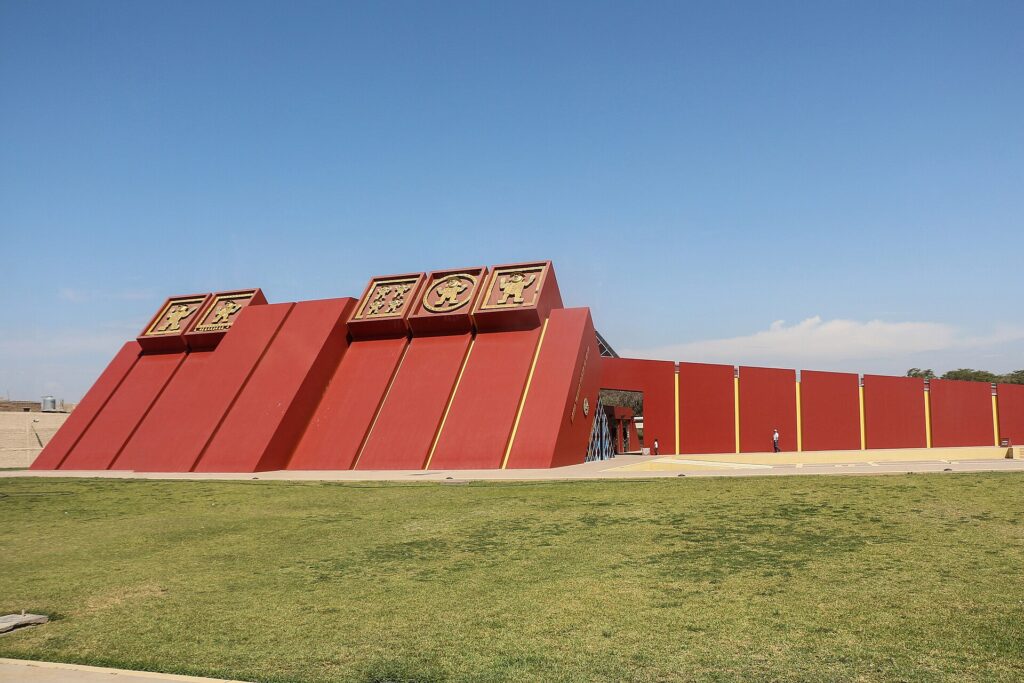
Túcume fits well into a trip along Peru’s north coast. For example, you can pair it with the Royal Tombs of Sipán museum in Lambayeque. Further south, the adobe city of Chan Chan is another highlight. Our Chan Chan and Trujillo guide covers it in detail.
Before you head out
Túcume rewards travellers who look beyond the famous names. You get pyramids, mythic reliefs and a museum built with the local community. Check the latest hours on the Ministry of Culture’s Túcume page before your visit. And if you plan to continue to the Andes, see our partner’s Cusco and Machu Picchu tour packages.