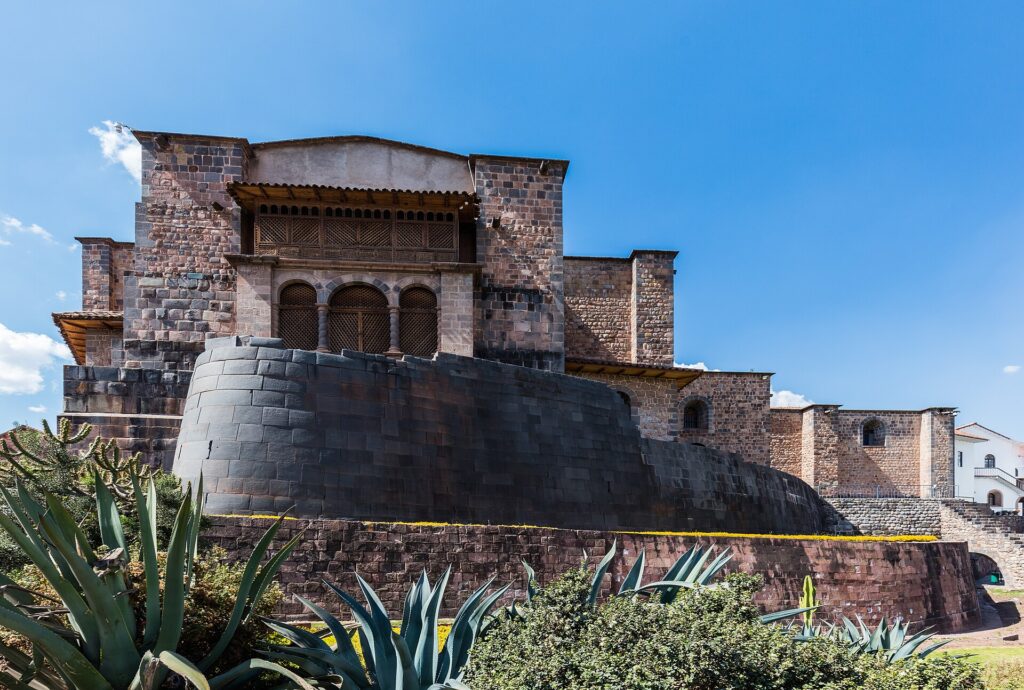
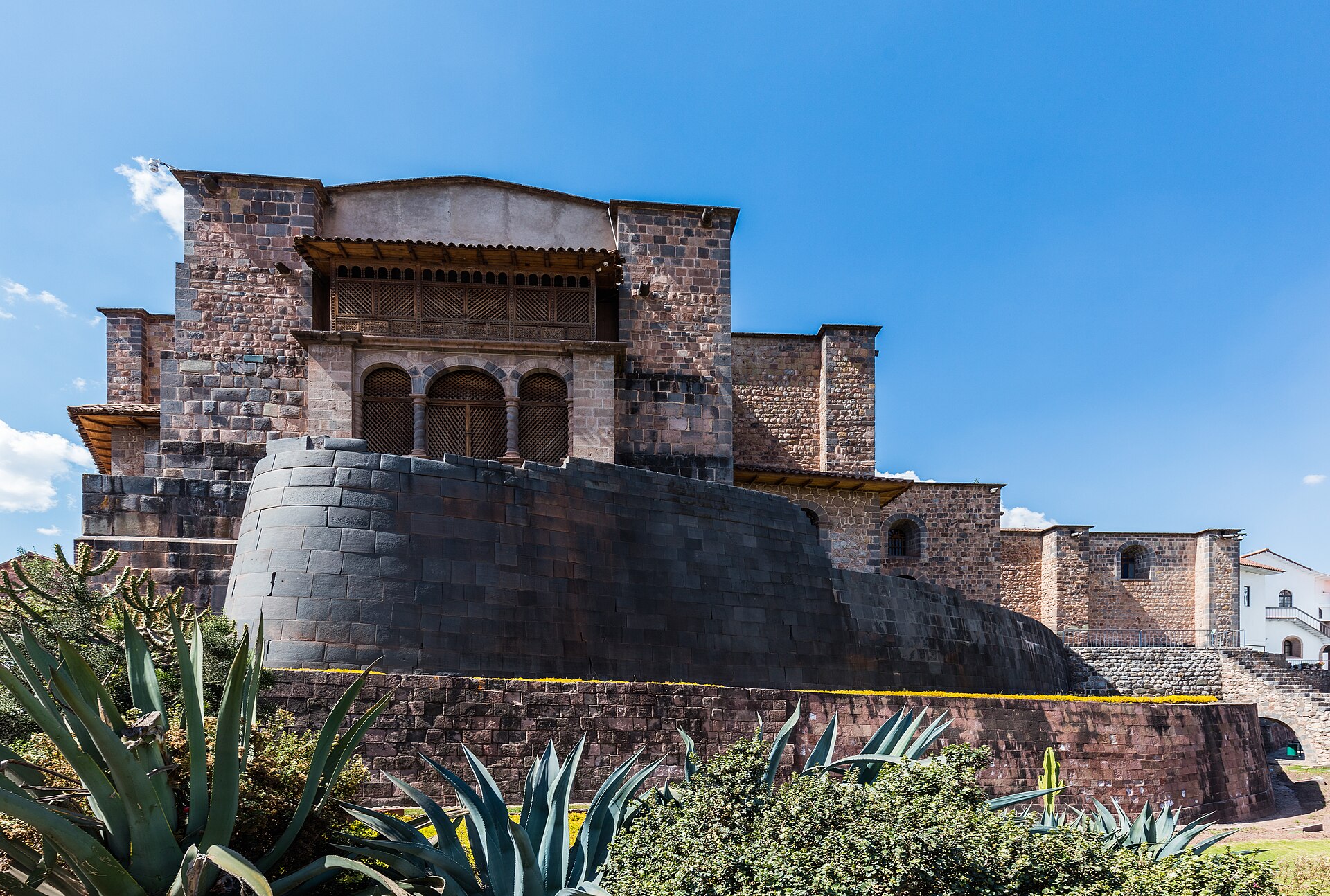
Walls once covered in sheets of gold still stand in the middle of Cusco. A Spanish church now sits on top of them. That strange mix of Inca stone and colonial building is the Qorikancha, just a short walk from the main square.
In this guide, you will learn what the Qorikancha was, what to see inside and how to plan your visit. Also worth knowing: we write this site on our own, so it is not the official peru.travel site. Our facts are drawn from MINCETUR, Peru’s tourism ministry, and from COSITUC, which manages the Cusco Tourist Ticket.
What Was the Qorikancha?
The name comes from Quechua. “Qori” means gold and “kancha” means enclosure, so it translates as “Enclosure of Gold.”
According to MINCETUR, it was the main religious temple of the Inca Empire. It was the spiritual center for the worship of Inti, the Sun. Its construction dates to the 15th century, under the Inca Pachacuteq. However, a smaller ceremonial site probably stood here before.
It was more than a temple, too. MINCETUR describes it as an astronomical observatory, a ceremonial center and a symbol of political and religious power.
Qorikancha at a Glance
| Fact | Detail |
|---|---|
| Location | Historic Centre of Cusco |
| Walk from Plaza de Armas | About 500 m, roughly 6 minutes |
| Altitude | About 3,400 m |
| Built | 15th century, under Pachacuteq |
| Colonial addition | Convent of Santo Domingo, 1534 to 1538 |
| Opening hours | 8:00 a.m. to 5:30 p.m., per MINCETUR |
| Best season | All year |
| Entry | Ticket required |
The Gold of the Qorikancha
MINCETUR says the walls were lined with plates of pure gold. Inside, there were gold and silver figures of sacred things. These included the sun, the moon, stars, lightning, mountains and animals.
There were also sacred gardens. In them, the Incas placed gold and silver copies of Andean plants and animals. Water channels and ceremonial fountains were used for purification rituals.
Sadly, that treasure is gone. When the Spanish arrived in the 16th century, they looted the temple. They removed the gold plates and melted down many objects.
Rooms for Many Gods
The complex held several sacred rooms. Each one honored a specific deity.
The main room was for Inti, the Sun. Beyond that, there were spaces for Killa, the Moon, and Ch’aska, the stars. Illapa, the god of lightning and thunder, had one as well. Finally, Pachamama, Mother Earth, and Wiracocha, the creator god, were also honored here.
Inca Stonework That Survived Earthquakes
The Qorikancha is a top example of the imperial Inca style, also called the Cusco style. Huge stone blocks were cut with great precision. Then they were fitted together without mortar.
The walls are trapezoidal and lean slightly inward. As a result, they were built to resist earthquakes. That is why they survive today, while many later colonial buildings did not.
In fact, MINCETUR notes that earthquakes in 1650 and 1950 badly damaged the colonial structures. The Inca walls, however, held firm. Look closely at the niches and windows, which are trapezoidal too.
From Temple to Convent
Between 1534 and 1538, the Spanish built the Convent of Santo Domingo on top of the Inca walls. It was given to the Dominican Order as part of the conversion of the region.
Today, that layering is the main reason to visit. You see solid Inca walls with colonial buildings rising above them. MINCETUR calls this contrast a powerful symbol of Peru’s history.
The site is cared for by the Dominican Order and the regional office of the Ministry of Culture. MINCETUR rates its condition as very good.
The Qorikancha Site Museum
Close by, there is a separate site museum. According to COSITUC, it has five rooms. It displays objects found on the Qorikancha esplanade, such as pottery, stone tools and metalwork.
The museum also shows skulls with trepanation and mummies. In addition, there are scale models of how the Qorikancha may have looked at its peak. COSITUC lists this museum among the sites of the Cusco Tourist Ticket. Wondering which version includes it? Our breakdown of the Cusco Tourist Ticket explains the options.
How to Visit the Qorikancha
Getting there is easy. MINCETUR puts it about 500 meters from the Plaza de Armas, or roughly six minutes. You can walk there on your first afternoon in the city.
Entry requires a ticket. MINCETUR lists visits all year, from 8:00 a.m. to 5:30 p.m. Still, hours can change. So confirm them at the door or with a local tourist office.
Because Cusco sits at about 3,400 meters, take it slow on day one. The Qorikancha is a good, gentle first visit. For more ideas, see our guide to your first day in Cusco.
Tips for Your Visit
- Start at the Plaza de Armas and walk the short 500 meters.
- Bring a camera, since MINCETUR lists photos and filming among the activities here.
- Pair it with the site museum to see objects found on the esplanade.
- Check your ticket before you go, because the temple and the museum are separate visits.
Before You Head Out
The Qorikancha tells the story of Cusco in one place: Inca faith, Spanish conquest and centuries of earthquakes. Plan an hour or two, walk over from the main square and look closely at the stones. If you want Cusco and Machu Picchu in one trip, you can browse the 4-day Cusco and Machu Picchu packages from Fullviajes.