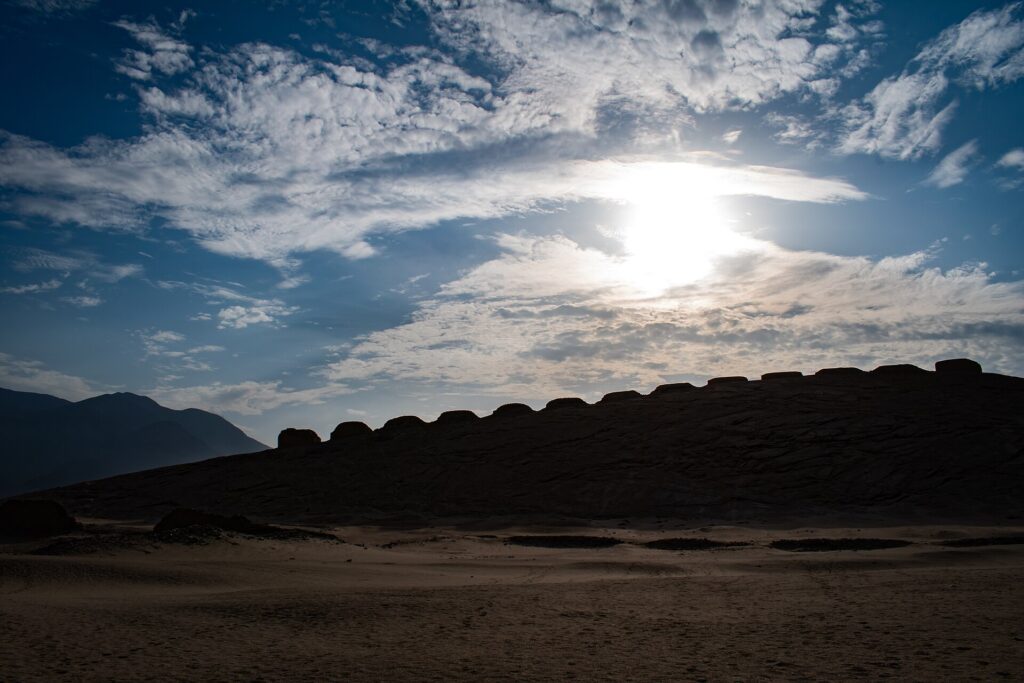
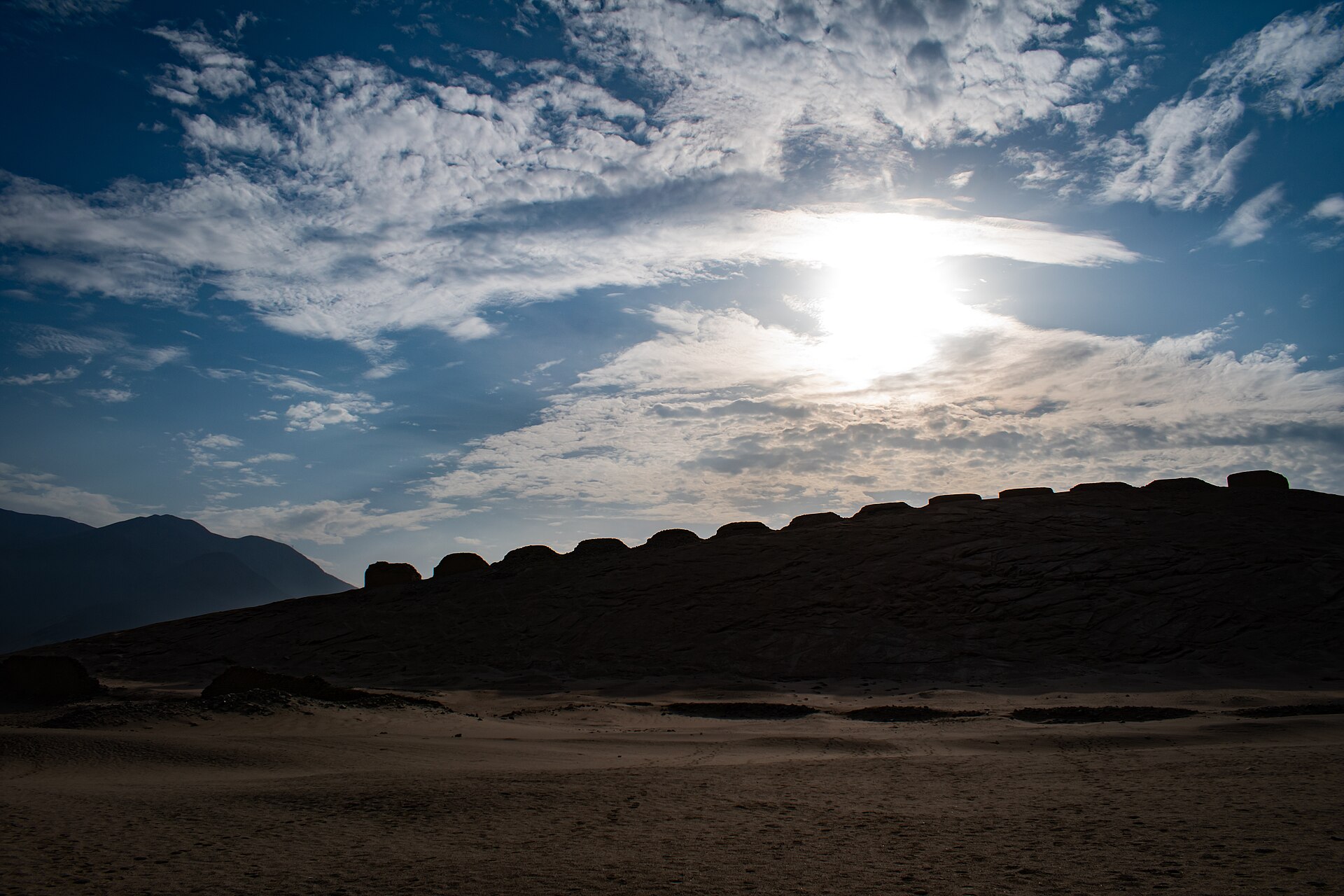
Thirteen stone towers stand in a row on a desert ridge. For centuries, people watched the sun rise and set behind them to read the date. This is Chankillo, in Peru’s Casma Valley, and it is the oldest known solar observatory in the Americas.
Quick note first: we are an independent guide, and this is not the official peru.travel site. Every fact below comes from UNESCO, Peru’s Ministry of Culture or the MINCETUR tourism fact sheet.
Chankillo at a glance
| Item | Details |
|---|---|
| Location | Casma Valley, Casma province, Áncash region |
| Altitude | About 299 m above sea level |
| Age | Used around 250 to 200 BC |
| World Heritage | Inscribed by UNESCO on 27 July 2021 |
| Opening hours | 6:00 am to 6:00 pm, all year |
| Entry | Listed as free on the MINCETUR fact sheet |
| From Casma | 14 to 16.5 km, about 25 to 30 minutes |
What makes Chankillo special
Many ancient sites line up with one sunrise, often a solstice. Chankillo, however, tracks the sun on every day of the year.
Here is how it works. The Thirteen Towers run north to south along a hill. As a result, they form a man-made horizon with gaps between them. From an observation point on each side, you can watch the sun move along that line.
According to UNESCO, the system marks the solstices, the equinoxes and any other date. In fact, its precision is one to two days.
The Ministry of Culture adds another detail. Chankillo is one of only two known sites in the ancient world with a complete solar horizon calendar. Also, its markers still exist and still work.
The main parts of Chankillo
UNESCO lists four key elements. Together, they explain the whole site.
- The Fortified Temple. A hilltop complex surrounded by three walls. MINCETUR describes concentric walls, towers and a walled central area with rectangular and circular rooms.
- The Thirteen Towers. A line of cube-shaped towers along the ridge of another hill. They are the heart of the solar calendar.
- The Observatory and the Administrative Centre. Two building groups outside the walled temple. One of the two observation points is still clearly visible above ground.
- Cerro Mucho Malo. A natural hill that works with the towers as an extra horizon marker.
The builders used stone from local quarries, still visible around the site. Meanwhile, the mud mortar came from the Casma Valley.
The protected property covers 4,480 hectares. In addition, a buffer zone of 43,990 hectares surrounds it.
A short history of Chankillo
Chankillo belongs to the late Early Horizon period of Peruvian history. UNESCO dates its use to a short window, between 250 and 200 BC. After that, it was destroyed and abandoned.
For a long time, the walls suggested a fortress. However, recent research changed that view. MINCETUR now describes Chankillo as a planned ceremonial and astronomical complex. It was probably dedicated to a sun cult.
The site also tells a bigger story. According to UNESCO, it marks the peak of a long tradition of sky-watching in the Casma Valley.
If ancient Peru fascinates you, compare it with Chavin de Huantar in the highlands of the same region. Likewise, our guide to Caral covers a far older city on the coast.
How to get to Chankillo from Casma
Casma is the base town. It sits on the Pan-American Highway, on Peru’s north-central coast. From there, the MINCETUR fact sheet lists three routes:
- By car on the Pan-American Highway. About 16.5 km, or around 30 minutes.
- By 4×4 on the same road. About 16 km, or around 25 minutes.
- By car through the valley. About 14 km, or around 30 minutes.
In Casma, the fact sheet lists hotels from one to three stars, restaurants and cafés. It also lists travel agencies, bike rental and a tourist information office. So you can sleep in town and visit early the next day.
Before you book long bus rides between regions, check our tips on getting around Peru.
Tips for visiting Chankillo
The site is open from 6:00 am to 6:00 pm, every day of the year. The MINCETUR fact sheet lists entry as free. Still, rules can change, so confirm on arrival.
Next, plan for the desert. There is little shade, and the sun is strong. For that reason, pack plenty of water, sun protection and a wide hat.
Also, respect the structures. UNESCO warns that collapsing edges on the towers can harm the precision of the calendar. So stay on marked paths and never climb the walls.
Finally, think about timing. The towers were built to frame the sunrise and sunset. If the sky is clear, an early visit makes their purpose easier to imagine.
Adding Chankillo to a bigger Peru trip
Most first-timers fly to Cusco and Machu Picchu. Chankillo is far from there, so treat it as a separate leg on the coast.
If you also want the Andes, Fullviajes offers Cusco and Machu Picchu tour packages. Then plan Chankillo as an extra trip north.
Final words before you go
Chankillo is not crowded, and it is not flashy. Instead, it shows how people in ancient Peru measured a full year with stone, hills and the sun.
So sleep in Casma, go early and walk the site slowly. Above all, picture the sunrise moving along those thirteen towers, one day at a time.